Wondering why Yalecrest feels so distinct the moment you drive through it? It is not just the mature trees or the East Bench setting. It is the way so many homes share a similar scale, rhythm, and historic character. If you are buying, selling, or simply researching the area, understanding Yalecrest’s architectural styles can help you spot what makes a home feel authentic and why that matters. Let’s dive in.
Why Yalecrest Architecture Stands Out
Yalecrest is a National Register historic district in Salt Lake City, and its identity is closely tied to how quickly it developed between 1910 and 1938. Salt Lake City notes that the neighborhood was built through 22 subdivisions during that period, which helps explain its strong visual consistency.
That consistency shows up in the streetscape. The city describes Yalecrest as visually cohesive, with uniform setbacks, comparable massing, mature trees, and homes that collectively define the district’s historic character. For you as a buyer or homeowner, that means the neighborhood experience is shaped as much by the overall setting as by any one house.
The numbers reinforce that sense of continuity. A 2005 reconnaissance survey documented 1,487 primary resources in Yalecrest, and 1,349 of them, or 91%, contribute to the district’s historic character. Most are residential, most are single-family, and most were built during the 1920 to 1939 period.
English Cottage Defines Yalecrest
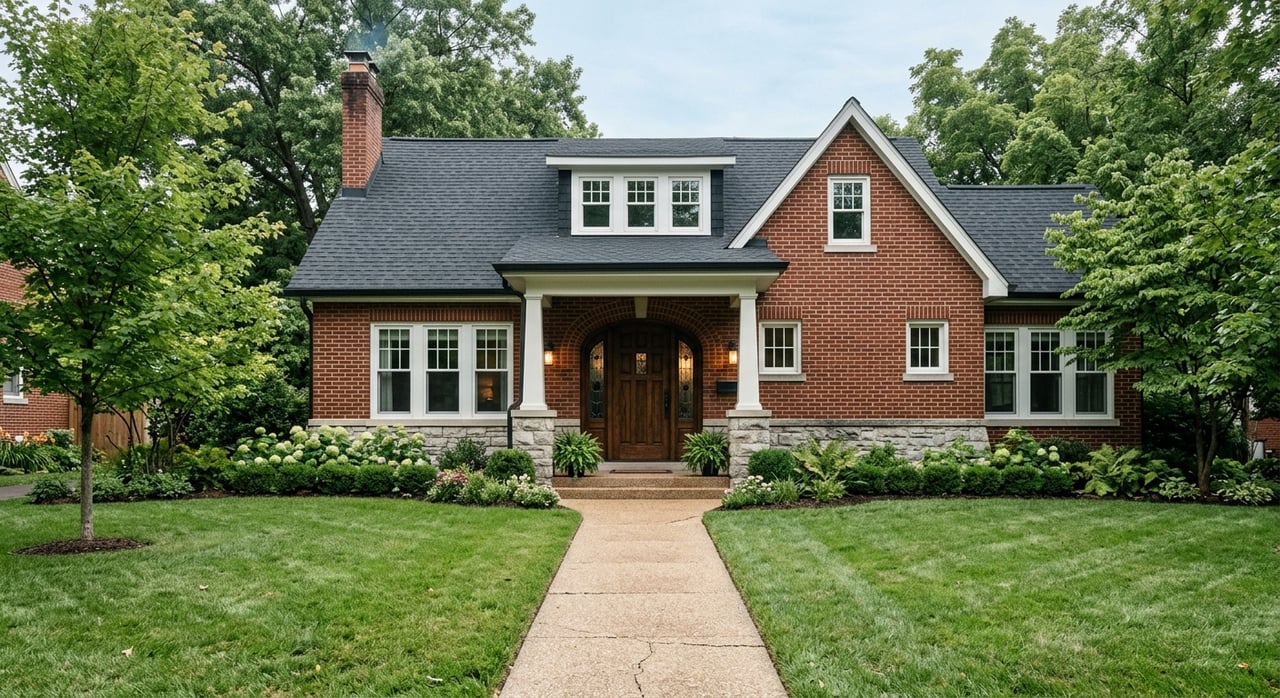
If there is one style that best captures Yalecrest, it is the English Cottage, often grouped more broadly under period cottages. The survey calls the typical Yalecrest house a brick, single-family English Cottage style period cottage built in the 1920s.
This style is more than a small slice of the neighborhood. The survey records 310 English Cottage examples, representing 19% of the district, while period cottages overall account for 53% of primary structures. That means when you picture the classic Yalecrest home, you are probably picturing this category.
What English Cottage Homes Look Like
English Cottage homes are usually compact and asymmetrical. Common features include:
- Intersecting gables
- Steep or mock-thatched rooflines
- Eyebrow dormers
- Grouped small-paned windows
- Round-arched openings
- Exterior mixes of stucco, stone, wood, or half-timbering
In Yalecrest, many of these homes appear in a simpler brick version of the style. You still get the storybook feel, but often in a more restrained and practical form that fits the neighborhood’s overall scale.
Why This Style Matters to Buyers
These homes tend to feel warm, human-scaled, and visually interesting without being oversized. Because Yalecrest developed largely during the height of these styles, the English Cottage look feels native to the neighborhood rather than added later.
If you are comparing homes, original massing, brickwork, rooflines, and window patterns often play a big role in how true a house feels to its period. In Yalecrest, that authenticity can shape both curb appeal and how well a home fits its surroundings.
English Tudor Adds Drama and Detail
Another major Yalecrest style is English Tudor. The survey identifies 242 English Tudor houses, which make up 15% of the district.
Tudor homes tend to be more dramatic and picturesque than simpler cottages. They often have irregular massing, steep gable or cross-gable roofs, mixed cladding, narrow casement windows, recessed entries, and decorative detailing.
The Tudor Feature Most People Notice
In Yalecrest, the survey specifically notes that half-timbering is the most recognizable Tudor feature. That visual detail gives many homes a distinct historic personality, especially when paired with steep rooflines and asymmetrical facades.
For you as a shopper, Tudor homes often stand out quickly in listing photos and on the street. They can feel a little more formal or stylized than English Cottage homes, while still fitting naturally into Yalecrest’s broader period-revival identity.
Bungalows Show Yalecrest’s Earlier Layer
Before period cottages fully defined the area, bungalows helped shape Yalecrest’s earlier development. The survey identifies bungalows as 19% of the principal house types, with Prairie School elements appearing in 7% of structures.
These homes are usually one or one-and-a-half stories, with most living space on the main floor. That low-slung profile is part of what gives many Yalecrest streets their close-to-the-ground feel.
Common Bungalow Traits
A bungalow typically includes:
- A low profile
- A broad front porch
- Side-, front-, or cross-gable roof forms
- Dormers
- Brick or stucco exteriors
In Yalecrest, some bungalows have seen later changes such as porch enclosures or added attic dormers. If you are evaluating one, it helps to distinguish original character from later modifications.
Colonial Revival Brings Symmetry
Colonial Revival is a smaller but still important part of Yalecrest’s architectural mix. The survey records 149 Colonial Revival homes, or 9% of the district.
These homes often present a more formal and balanced appearance than cottages or Tudors. You may see symmetrical facades, centered entries, fanlights or sidelights, columns or pilasters, and hipped or gabled roofs.
Some are full two-story brick homes, while others are smaller Cape Cod cottages. In a neighborhood known for picturesque forms, Colonial Revival homes add a more orderly and classically detailed layer.
Less Common Styles Add Variety
Yalecrest is not limited to just a few styles. The district also includes smaller numbers of French Norman, Dutch Colonial, Jacobethan Revival, Spanish Colonial Revival, Art Moderne, Art Deco, and International Style homes.
These are less common, but they matter because they add visual variety without changing the neighborhood’s overall identity. The dominant impression remains period-revival cottages, Tudors, bungalows, and brick homes that share a similar scale and rhythm.
The Common Yalecrest House Profile
Even with several styles present, Yalecrest homes share some broad physical traits. According to the survey, 66% of buildings are one story, 23% are one-and-a-half stories, and 10% are two stories.
That tells you a lot about how the neighborhood feels in person. Most homes are compact by modern standards, and the modest height helps keep the streetscape consistent.
Other recurring features also shape the neighborhood’s look:
- 54% of buildings use brick cladding
- Most garages are detached and placed behind the houses
- Much of the housing stock dates from 1920 to 1939
If you are moving from a newer subdivision, Yalecrest may feel more intimate and more textured. The lot patterns, house placement, and detached garages all contribute to that older neighborhood form.
What Renovations Usually Change
One of the most practical things you can understand as a buyer or seller is how Yalecrest homes have changed over time. The survey notes several common alterations to bungalows and period cottages.
These often include:
- Replacement windows
- Vinyl or aluminum siding over original materials
- Added dormers for attic space
- Rear additions
- Enclosed front porches
Not every change has the same impact. In a neighborhood where historic character matters, alterations that affect original massing, porch form, roofline, or exterior materials are often more noticeable than updates tucked to the rear.
Why Integrity Matters in Yalecrest
Yalecrest’s value story is closely tied to integrity. Salt Lake City describes the district as visually cohesive, and that cohesiveness depends on homes still reading as period houses within the larger streetscape.
In practical terms, homes that retain original brick, porch forms, rooflines, windows, and landscaping often feel more authentic. Heavily reclad or oversized additions can stand out more in a neighborhood where the historic pattern is so strong.
The survey also flags oversized houses and intrusive additions as a neighborhood concern. If you are buying, that is a useful lens for evaluating whether a renovation complements the home or competes with it.
Historic District Rules to Know
Some parts of Yalecrest are also local historic districts, including Normandie Circle, Upper Harvard Yale Park, Harvard Park, Princeton Park, and Douglas Park. In these locally designated areas, exterior changes require a Certificate of Appropriateness before permit review.
For you, that does not necessarily mean a project is impossible. It does mean exterior work may involve added review time, especially if it affects visible historic features.
If you are considering a purchase with renovation plans, this is an important part of your due diligence. The style of the home is only one piece of the puzzle. The approval process for exterior changes can matter too.
What This Means for Buyers and Sellers
If you are buying in Yalecrest, architectural style is not just aesthetic. It can influence maintenance priorities, renovation flexibility, and how naturally a home fits the neighborhood.
Salt Lake City’s Preservation Handbook notes that historic buildings are often durable and adaptable, with floor plans that can accommodate contemporary lifestyles. The handbook also says preserving elements in good repair is generally preferred to replacing them, and careful restoration may cost more upfront but often lasts longer.
That perspective matters in Yalecrest. Older homes can require stewardship, but they also offer materials and design features that have already stood the test of time.
The handbook also notes that older buildings can be energy efficient, particularly when they have thick brick or stone walls and natural ventilation. That does not remove the need for thoughtful maintenance, but it does add context for buyers looking at older construction.
For sellers, understanding your home’s style can help you present it more effectively. A Yalecrest home is not just another property. Its story often lives in the details, from brickwork and rooflines to porch form and detached garage placement.
Why Yalecrest Feels So Cohesive
The magic of Yalecrest is not that every house looks the same. It is that so many homes speak the same architectural language.
Period cottages, Tudors, bungalows, and Colonial Revival homes all contribute to a neighborhood that feels unified without feeling repetitive. Add mature trees, consistent setbacks, and modest massing, and you get one of Salt Lake City’s most recognizable historic environments.
If you are searching for a home here, you are not just choosing square footage or finishes. You are choosing a relationship to history, design, and a streetscape that has kept much of its original identity.
Whether you are buying a brick English Cottage, evaluating a Tudor with later additions, or preparing to sell a well-preserved bungalow, it helps to have a guide who understands both the home and the neighborhood story. If you want help navigating Yalecrest with a local, consultative approach, connect with James Roth.
FAQs
What architectural style is most common in Yalecrest?
- English Cottage and other period cottage homes are the defining styles in Yalecrest, with period cottages making up 53% of primary structures according to the district survey.
What do Yalecrest Tudor homes usually look like?
- Yalecrest Tudor homes often feature steep gables, irregular massing, narrow casement windows, recessed entries, mixed cladding, and decorative half-timbering.
Are most Yalecrest homes large or compact?
- Most Yalecrest homes are compact by modern standards, with 66% of buildings recorded as one story and 23% as one-and-a-half stories.
What exterior changes are common in Yalecrest homes?
- Common changes include replacement windows, siding over original materials, added dormers, rear additions, and enclosed front porches.
Do Yalecrest historic district homes have renovation rules?
- In parts of Yalecrest that are local historic districts, exterior changes require a Certificate of Appropriateness before permit review.
Why does original character matter in Yalecrest homes?
- Original brick, rooflines, porch forms, windows, and landscaping often help a home feel more authentic and more consistent with Yalecrest’s historic streetscape.