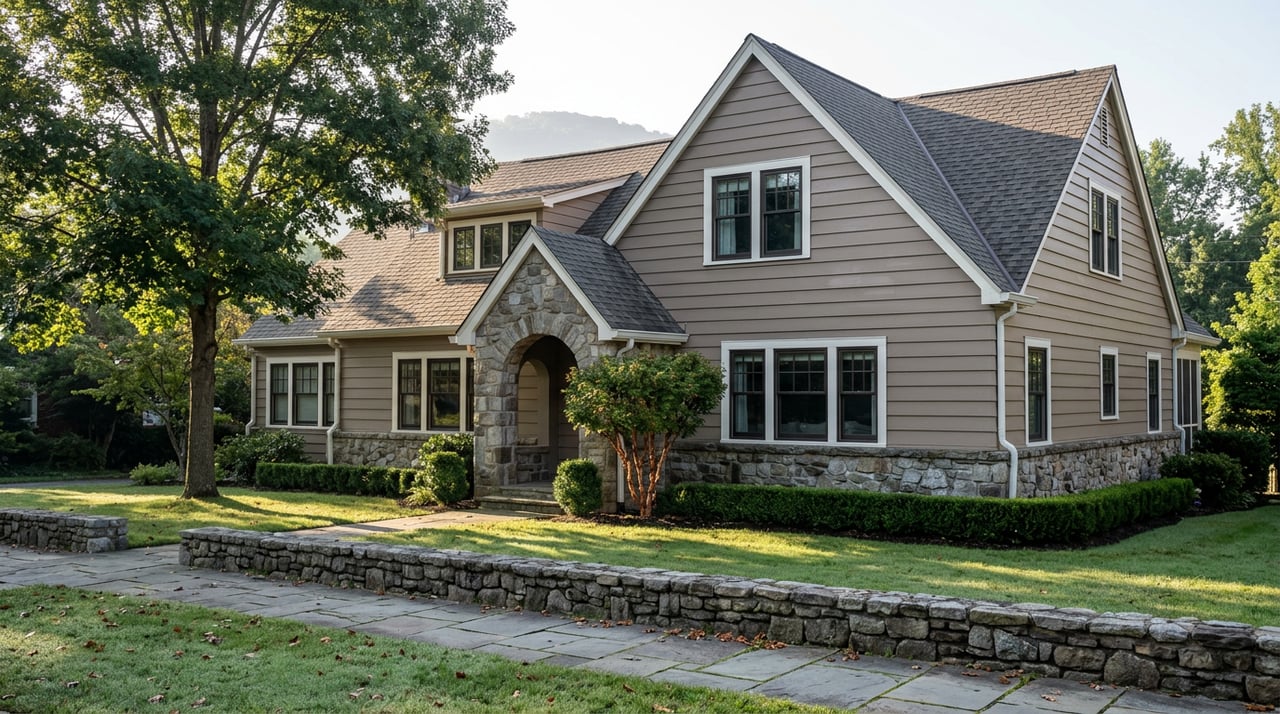
In St. George, the date a house first connected to the water system decides which water rules it follows. The Washington County Water Conservancy District sets the monthly limit at which a home starts paying an excess-use surcharge, and it bases that limit on the date the home connected to the system. Homes connected before January 1, 2023 get a high limit and a $1 surcharge. Homes connected on or after that date get a much lower limit and a $10 surcharge.
So a 2021 resale and a 2026 new build can share a street, a floor plan and nearly the same price, and still have very different water costs once someone turns on the sprinklers. Portal medians and listing sheets don't show this. It only comes up when a buyer asks about it.
The rule, line by line
The district states it plainly on its rates page. The limit "is based on the date the user connected to the system," and anything collected above it funds conservation programs.
| Residential connection | Winter, Dec–Feb | Spring, Mar–Apr | Summer, May–Sept | Fall, Oct–Nov | Surcharge above limit |
|---|---|---|---|---|---|
| Before Jan. 1, 2023 | 36,000 gal | 36,000 gal | 36,000 gal | 36,000 gal | $1 per 1,000 gal |
| On or after Jan. 1, 2023, potable only | 8,000 gal | 15,000 gal | 20,000 gal | 15,000 gal | $10 per 1,000 gal |
| On or after Jan. 1, 2023, Ultra Water Efficient | 8,000 gal | 8,000 gal | 8,000 gal | 8,000 gal | $10 per 1,000 gal |
St. George residents don't get a separate bill from the district. The City of St. George utility rates page says the city collects WCWCD charges on its own utility bill and passes them to the district, a requirement of the city's Regional Water Supply Agreement. The city's notice also lists January 1, 2023 as the effective date and describes the typical home as having a 3/4-inch meter. These surcharges sit on top of the city's own tiered rates, which already charge more per gallon as use climbs. Secondary irrigation water, where available, is billed at 60% of the culinary rate.
The policy isn't limited to St. George. In June 2024, Hurricane passed an ordinance that matched its penalties to the district's, $1 for connections made before the cutoff and $10 for those made after, according to St George News.
What the gap looks like in dollars
These examples use only the district's published limits and surcharge rates. They leave out the city's base fee and tiered charges, which apply to every home either way.
- A winter month at 20,000 gallons. A home connected before 2023 is under its 36,000-gallon limit and pays no surcharge. A home connected after the cutoff is 12,000 gallons over its 8,000-gallon winter limit, which adds $120 in surcharge.
- A summer month at 25,000 gallons. The older home still pays nothing. A post-cutoff, potable-only home is 5,000 gallons over its 20,000-gallon summer limit, which adds $50.
- A summer month at 15,000 gallons on an Ultra Water Efficient connection. The limit stays at 8,000 gallons all year, so 7,000 gallons over adds $70.
- A heavy month at 40,000 gallons for the older home. It goes 4,000 gallons over its limit and pays $4.
That last example shows how wide the gap is. An older home using twice the water of a newer one can still pay less in surcharge.
The newer house paid once already, before anyone moved in
The connection date also decides a one-time cost. WCWCD charges an impact fee before a building permit is issued. Under its current schedule, a standard 3/4- or 5/8-inch residential water-efficient connection is $17,266. An Ultra Water Efficient connection is $11,413. The district says these fees vary with irrigated area and other factors. The lower Ultra fee is only available where the city has adopted those standards and the development meets them.
These amounts come from the district's Regional Water Impact Fee Facilities Plan, adopted December 1, 2025. The plan's cover gives March 2, 2026 as the effective date, though the enacting resolution says March 1. Minutes from a January 2026 regional water supply committee meeting refer to a "typical $13,000 impact fee," but the district hasn't published a matching earlier fee table, so the exact size of the increase isn't confirmed.
Builders talked about the fee in public meetings. At the December 1, 2025 board meeting, WCWCD General Manager Zach Renstrom said the district had met with the home builders association and that builders were surprised the calculated fee was as low as it was, according to the board minutes. At the January 28, 2026 regional water supply committee meeting, Stacy Young of the Southern Utah Homebuilders Association said that higher costs can price buyers out, according to the committee minutes. Young pointed to smaller lots with lower impact fees and lower water use as one way to keep homes affordable while saving water.
Put the two costs together and a post-2023 home starts with an impact fee folded into its construction cost, then runs under tighter monthly limits for as long as it's connected.
Why the district drew the line this way
The rules make sense once you see the supply math the district is working with. Its adopted fee plan says existing water sources have little spare capacity, and that without new supply, potable sources fall short of demand in 2027. The plan's 10-year project list relies on other supply and reuse projects. It leaves the Lake Powell Pipeline out of that window while keeping it in long-term planning. Utah's draft 2026 State Water Plan describes the pipeline as a potential 140-mile project delivering about 84,000 acre-feet a year to Washington County, and notes it still needs more permitting before it could go ahead.
With new supply uncertain, the district put its tightest limits on future demand. That's why the strictest rules apply to connections that didn't exist yet. Homes connected earlier kept the terms they connected under.
The same logic shapes yards. WCWCD's October 2023 Water Efficiency Standards cover new development using district or partner-city water. They cap single-family lawn at 8% of the lot or 2,500 square feet, whichever is less, and allow up to 600 square feet on lots under 7,500 square feet. The Salt Lake Tribune reported that all of the district's cities had signed on to those standards by early 2024. The stricter Ultra Water Efficiency Standards go further. They ban irrigated lawn except at community recreation facilities, cap irrigated landscaping at 2,000 square feet per detached home, ban spray irrigation, and require ongoing enforcement through the community association. They're voluntary in cities that haven't adopted them.
So a newer home's yard and its water bill come from the same set of rules. A resale may come with a big lawn and a 36,000-gallon limit. For older homes with lawns, the district and state are offering a temporary rebate of $3 per square foot on the first 1,000 square feet converted, for projects finished before June 1, 2027, St George News reported.
A buyer's market makes the question easier to ask
Buyers have more room to ask about water this fall. In August 2026, Washington County had a median sales price of $512,495, down 3.3% from August 2025. It also had 2,153 homes on the market, 71 days on market and 5.5 months of supply, according to the Utah Association of Realtors market report. Sellers received 96.1% of original list price, a figure that leaves out seller concessions. The Board of Realtors' July 2026 report showed a $540,000 median, so one month's change shouldn't be read as a trend.
For comparison, KSL reported on Sept. 30, 2026 that August supply was 5.5 months in Washington County, 3.9 in Davis County and four in Salt Lake County. In the same story, Utah Association of Realtors President-elect Aaron Drussel said more inventory, including homes from builders offering more incentives, plus sellers cutting prices, was creating more room to negotiate.
Builder incentives make a new home look cheaper on paper. The connection date decides what that home costs to run afterward. When two homes are close in price, those monthly costs can matter as much as the incentive.
Questions worth raising before an offer
- When did the meter connect? A home's age points to the answer, but the connection date is what the district uses.
- Is it potable only, potable with secondary irrigation, or Ultra Water Efficient? For post-2023 homes, the limit changes with the connection type.
- What did the last 12 months of utility bills show? Ask whether the WCWCD charges appear as a line item.
- How much of the yard is irrigated, and with what system? Spray heads and turf are what push use past the limit.
- Does an HOA enforce landscaping under the efficiency standards? In Ultra communities, enforcement runs through the association.
Quick answers
Does the $10 surcharge apply to every new home in St. George? It applies to residential connections made on or after January 1, 2023. Those homes pay it on any use above their seasonal or year-round limit.
Does buying an older home lock in the 36,000-gallon limit? The district bases the limit on when the home connected to the system, and the rates page doesn't say a sale changes it. Check current terms with the City of St. George utility office before relying on them.
Is the Lake Powell Pipeline going to change any of this soon? It's outside the district's 10-year plan, and the draft State Water Plan says it needs more permitting.
This post is general information, not legal, tax or financial advice. Fees and rules change, so confirm the details for any specific property with the City of St. George, WCWCD or the right professional.
If you're weighing a St. George resale against a new build, the connection date is one of the first things James and his team look up, along with the utility history and the landscaping rules that come with the property. Bring us the addresses you're comparing, and James Roth will lay out the water numbers next to the price. Work With James.